


Construction sites once relied heavily on paper drawings, manual coordination, and long design revisions. The modern BIM Automation AEC Industry landscape now looks very different. Digital modelling, smart scripts, and automated processes quietly reshape how buildings move from concept to construction.
In many big cities, builders and designers are jumping on BIM Automation in construction to manage messy design coordination. This shift is all about hitting deadlines faster and getting the details right the first time.
Massive infrastructure and high-rise jobs need teams to move fast. Old-school workflows just can’t keep up, which is where automated BIM workflows come in to turn slow, manual modeling into a smooth digital process.
Growth of Digital Automation in the AEC Industry
Lately, AEC industry digital automation has really taken off. Companies now use scripts and parametric modeling automation to boost efficiency, letting the software handle the grunt work while the pros focus on the actual design.
We’re seeing a massive shift toward BIM process automation because it finally makes coordination reliable. From that initial sketch all the way to automated construction documentation, automation kills off human error and keeps every team on the same page.
Productivity and Innovation Driving BIM Automation
This trend is part of the bigger AEC digital transformation. Huge government projects and city developments need fast, digital delivery, which is forcing more firms to embrace automated modeling.
A huge reason BIM automation for architects, engineers, and contractors is growing is pure productivity. These tools crush repetitive tasks way faster than a person can, letting teams nail tight deadlines with accurate models.
According to insights discussed by the digital construction community and resources like Autodesk BIM technology overview, automation within BIM environments allows smarter model management, improved coordination, and data-driven design workflows.
Understanding BIM Automation in the AEC Industry
The BIM Automation AEC Industry concept automates repetitive modelling, coordination, and documentation tasks within Building Information Modelling environments. Instead of manually performing every modelling action, scripts and parametric rules guide the system to automatically generate and manage design elements.
Common forms of smart BIM automation solutions include:
- Automated BIM model generation
- Automated clash detection BIM
- Parametric modeling automation
- BIM scripting and automation tools
- BIM API automation for data integration
These tools link your modeling software directly to design rules. Once those are set, any change you make ripples through the entire model instantly. For example, if a beam moves, the architectural and MEP bits adjust automatically. This is exactly how BIM automation improves productivity and flow on a live job.
Why BIM Automation AEC Industry Adoption Is Rising
Growing project complexity plays a major role in expanding automation in the architecture industry workflows. Modern buildings involve multiple design disciplines working simultaneously. Coordinating everything by hand is slow and leads to mistakes. Automation fixes this by making the models consistent and speeding up the whole coordination process.
Key factors behind rising adoption
- Increasing demand for BIM automation for faster project delivery
- Growing need for reducing errors using BIM automation
- Improved collaboration between architects, engineers, and contractors
- Government encouragement of digital construction methods
- Availability of tools such as Dynamo BIM automation
These perks are exactly why BIM automation AEC industry adoption is exploding among firms handling the biggest builds.
How Automated BIM Workflows Improve Productivity
Getting more done in less time is still the number one reason for using BIM automation in construction. Hand-modeling involves doing the same thing over and over, which wastes hours. Automation scripts kill off those repetitive chores for good
Productivity benefits include:
- Automatic generation of building components
- Faster updates to design revisions
- Real-time coordination across disciplines
- Efficient model data management
- Reduced manual modelling effort
When you set up a BIM model automation workflow, your team can spend their energy solving real design problems instead of just clicking the same buttons. On high-stakes jobs like WA’s infrastructure projects, being more productive is the difference between finishing on time or blowing the schedule.
Role of Automation in BIM Modelling
Automation plays a strategic role across the entire BIM process automation lifecycle.
1. Design Development
Parametric modeling automation allows intelligent design components that automatically adapt when dimensions or constraints change.
2. Model Coordination
Using automated clash detection BIM tools lets you spot fights between the structure and the MEP systems the second they happen.
3. Documentation
Automated construction documentation ensures that drawings update automatically when the model changes. This integration significantly improves BIM automation for construction design coordination, reducing delays and improving design clarity.
BIM Automation for Architects, Engineers, and Contractors
Each discipline within the BIM Automation AEC Industry benefits from automation tools.
BIM automation for architects
Architects use scripts to whip up layouts and facade patterns in no time. With parametric modeling automation, you can tweak a design without starting from scratch.
BIM automation for engineers
Engineers lean on BIM data automation and structural scripts to fine-tune their systems while keeping everything 100% accurate.
BIM automation for contractors
Construction professionals benefit from automated quantity extraction, scheduling integration, and construction documentation. These capabilities support BIM-based project automation, allowing construction teams to move from design to execution with minimal friction.
Dynamo BIM Automation and Scripting Tools
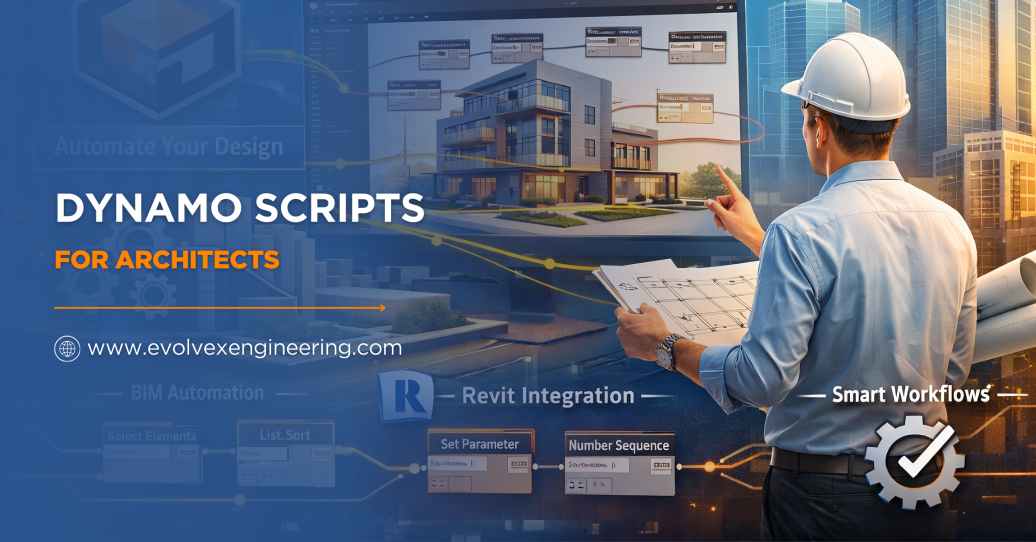
One of the biggest tools in the BIM automation AEC industry right now is Dynamo. Dynamo BIM automation lets you use visual scripting right inside your modeling software. Instead of writing complex programming code, graphical nodes allow the creation of automated workflows.
These workflows support tasks such as:
- Automated BIM model generation
- Parametric design adjustments
- Model data extraction
- Automated documentation creation
Dynamo also connects with BIM API automation, enabling deeper customisation for advanced modelling tasks. Such tools form the backbone of smart BIM automation solutions used by digital construction teams today.
Reducing Errors Using BIM Automation
People make mistakes; it’s just a fact in modeling. Reducing errors using BIM automation is possible because the software follows strict, consistent logic every single time. This approach eliminates inconsistencies that often occur in manual modelling processes.
For instance, automated clash detection BIM finds those system overlaps before you even get to the site. Catching these early means you aren’t paying for expensive fixes during the build. Improved accuracy strengthens AEC industry digital automation, helping firms deliver reliable construction documentation.
Benefits of BIM Automation in the AEC Industry
| Benefit | Impact on Construction Projects |
|---|---|
|
Faster modelling workflows |
Shorter design timelines |
|
Automated clash detection |
Fewer coordination errors |
|
Parametric modelling |
Flexible design adjustments |
|
BIM data automation |
Improved data management |
|
Automated documentation |
Accurate construction drawings |
BIM Automation and AEC Digital Transformation
The broader movement toward AEC digital transformation continues to accelerate. Modern construction now mixes BIM process automation with cloud tech and data to get projects delivered as efficiently as possible.
Cities experiencing rapid infrastructure growth increasingly rely on digital modelling to support large-scale construction planning. In this market, a solid BIM automation workflow in construction projects isn’t just a “nice to have”, it’s a core skill. It makes your designs bulletproof, speeds up the talking, and makes life easier for the building’s owners later on.
Future Outlook for BIM Automation in Construction
The BIM automation AEC industry never stops moving, especially with the way AI, generative design, and digital twins are coming into play.
Future developments may include:
- AI-driven automated BIM model generation
- Advanced parametric modeling automation
- Predictive construction scheduling
- Intelligent BIM data automation systems
Such innovations will further strengthen automation in the architecture industry workflows. As the whole AEC digital transformation picks up speed, these tools are going to be the standard way of working, not just some niche technology for specialists.
Conclusion
This surge in BIM-based project automation shows how much the industry is changing. Automated BIM workflows take the pain out of modeling and stop expensive errors before they happen.
Whether it’s BIM automation for architects or BIM API automation for engineers, these tools make a massive difference in how much work gets done. With infrastructure booming, smart BIM automation solutions are going to be right at the center of how we build. Businesses seeking efficient project delivery, accurate modelling, and better collaboration can benefit significantly from BIM automation.
Get a quote today to explore professional BIM automation services designed for faster project delivery and improved design coordination. Contact today to discuss customised solutions tailored to modern construction workflows.
FAQs on BIM Automation
How BIM Automation Improves Productivity in Construction?
Automation handles repetitive modelling tasks, updates models instantly during design changes, and streamlines documentation. These features let your team actually focus on the BIM automation for construction design coordination instead of getting bogged down in manual work.
What Tools Are Used for BIM Automation?
Most pros stick to Dynamo, Revit API, and automated clash detection BIM setups. These are the tools actually driving BIM process automation and smart modeling right now.
How Does BIM Automation Help Construction Coordination?
Automation is a lifesaver because it gives you automated clash detection BIM and live updates. It’s what keeps the architects and engineers actually talking to the contractors during the planning phase.